
How to Choose a Heat Pump Programmable Thermostat
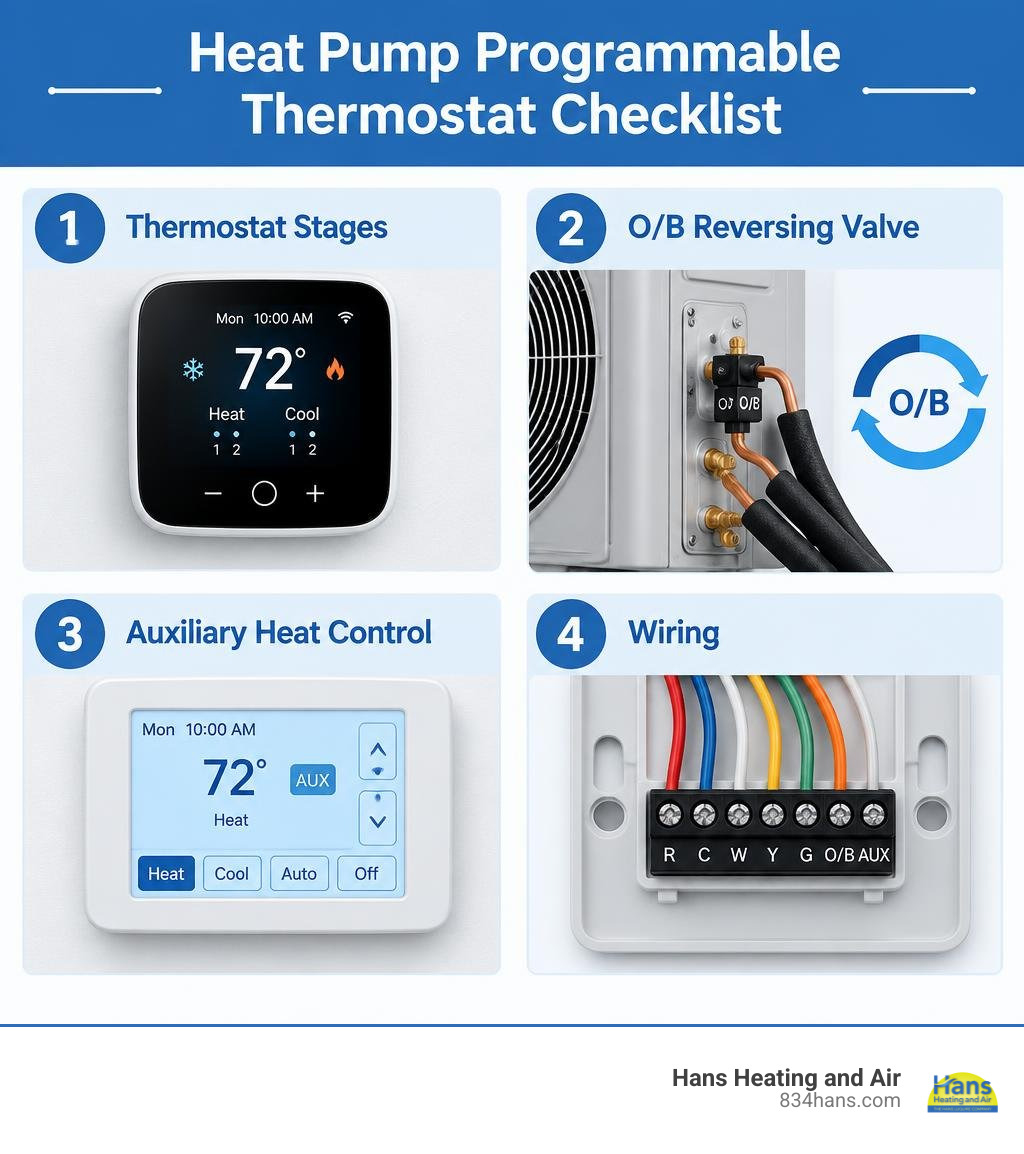
Seeing “AUX” on your thermostat after a cold night? Choose a heat pump programmable thermostat that matches your system’s heating and cooling stages, supports its O/B reversing valve, and can control auxiliary heat. Several manufacturers offer models worth comparing, but check the exact model against your wiring before you buy.
A schedule can help save energy, but a large winter temperature setback may call for electric backup heat when the house warms up again. That’s why heat pump controls matter more than Wi-Fi or a sleek screen.
I’m James Holland, and I’ve spent more than 20 years working with residential heating and cooling systems. I’ll use that experience to show you what to check when choosing a heat pump programmable thermostat. If you need help in Central Alabama, Hans Heating & Air can help you find the right match.
Why You Need a Dedicated Heat Pump Programmable Thermostat

Heat pumps work differently from standard natural gas or propane furnaces. Instead of creating heat by burning fuel, your heat pump moves heat from the outdoor air into your home using refrigerant and a compressor. In our River Region climate, this process is remarkably efficient for most of the winter.
Standard thermostats often treat heating as a simple on-and-off switch. When a conventional control sees a sudden temperature drop or a big scheduled jump in target temperature, it may immediately call for auxiliary backup heat. In many Alabama homes, that backup is an electric resistance heat strip inside the air handler.
Electric resistance heat uses significantly more electricity than the heat pump compressor itself. If your thermostat triggers auxiliary strips unnecessarily every morning, your utility bill can jump unexpectedly. Learning whether do heat pumps work in winter Alabama conditions requires understanding how the compressor operates alongside backup heating.
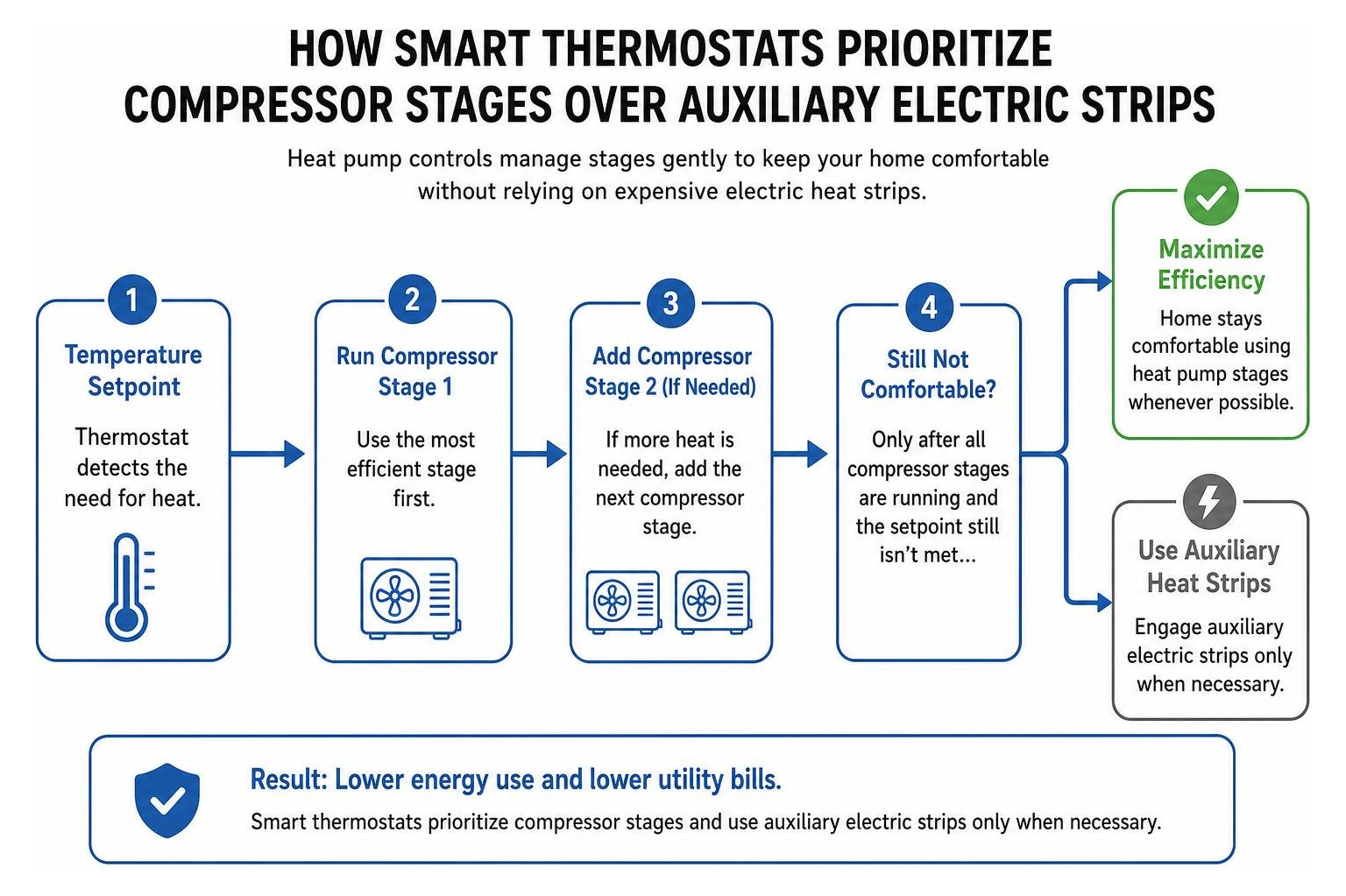
Comparing a heat pump vs furnace shows that heat pumps deliver steady, lower-temperature air over longer run times. A dedicated heat pump control manages these stages gently, ensuring your home stays comfortable without relying on expensive electric heat strips.
Key Features to Look for in Heat Pump Controls
When shopping for controls, general thermostat features like backlighting or remote scheduling are helpful, but heat-pump-specific logic is what protects your energy budget. Look for a programmable thermostat for a heat pump that is built specifically to manage multi-stage equipment rather than a basic model designed only for a furnace.
Key Features of an Efficient Heat Pump Programmable Thermostat
The first detail to verify is system staging compatibility. Single-stage heat pumps with electric backup typically require a 2 Heat / 1 Cool (2H/1C) setup, while two-stage or dual-fuel systems often need a 3 Heat / 2 Cool (3H/2C) configuration. A multi-stage thermostat lets you tailor staging to your exact equipment so no capacity goes unused.
Your thermostat must also correctly control the O/B reversing valve. This component tells the heat pump whether to run in cooling mode or heating mode depending on how the manufacturer energizes the valve. If this setting is reversed, your system will blow cold air when calling for heat.
Another critical feature is auxiliary heat lockout. High-efficiency controls allow you to set an outdoor temperature threshold below which the heat strips are locked out, forcing the compressor to do the heating during milder weather. Correct sensor placement helps the thermostat respond to the temperature inside your home rather than a misleading reading caused by a nearby heat source or draft.
Understanding Wiring, Voltage, and C-Wire Requirements
Most residential split-system heat pumps use standard 24-volt low-voltage control circuits. Modern programmable and smart thermostats require a steady flow of electrical power to run internal processors, backlights, and Wi-Fi radios.
This continuous power is delivered through the common wire, or C-wire. While older mechanical thermostats only completed a circuit to turn equipment on, smart devices rely on the C-wire to return electrical current to the 24V transformer. Determining if a smart thermostat worth it spring Montgomery AL upgrade depends largely on your existing wall wiring.
If your wall bundle lacks a dedicated C-wire, many thermostats offer power extender kits or adapters that route power using existing conductors. Choosing a thermostat with flexible power options makes installation smoother and prevents equipment communication errors.
Top Smart and Programmable Thermostats for Heat Pumps in 2026
Modern smart controls offer varied features for managing heat pump performance. The comparison below highlights the kinds of specifications worth checking across top-tier models on the market today:
| Thermostat Type | Staging Support | C-Wire Required | Aux Heat Lockout | Estimated Savings |
|---|---|---|---|---|
| Premium Smart Model | Up to 4H/2C | Yes (power kit included) | Yes (Advanced outdoor logic) | Up to 26% |
| Essential Smart Model | Up to 3H/2C | Yes (power kit included) | Yes (smart staging) | Up to 23% |
| Basic DIY Model | Up to 2H/1C (HP) | No (for most basic setups) | Basic via app | Approx. 23% |
| Touchscreen Model | Up to 4H/2C | Yes | Yes | Approx. 23% |
| Pro-Grade Wi-Fi Model | Up to 3H/2C | Yes | Yes (Installer setup) | Up to 10-15% |
Finding the best thermostat setting for summer and winter helps lower power bills, while local programs and federal state incentives can offset the initial purchase cost of Energy Star models.
Premium and Essential Smart Models
The top-tier smart models stand out for their dedicated heat pump staging controls. Their proprietary smart staging software prevents aggressive recovery spikes, gradually ramping up indoor temperatures using compressor heat rather than electric strips.
The premium tier often includes remote room sensors that detect both occupancy and temperature across hot or cold spots in the home. Homeowners can set specific outdoor compressor lockout temperatures using local weather data, helping prevent auxiliary strip activation during mild winter mornings.
Touchscreen and Basic DIY Models
Entry-level smart thermostat lineups provide an approachable, DIY-friendly interface with straightforward heat pump terminal labels. The basic model can often operate on battery power without a dedicated C-wire in conventional heating configurations, though a C-wire is recommended for heat pump stability.
Touchscreen models feature a clear color display, remote sensor support, and geofencing to adjust temperatures when you leave home. These systems often emphasize privacy and maintain reliable scheduling even during home network dropouts.
Pro-Grade Wi-Fi Models
Pro-grade thermostats remain popular among professional technicians for their durability and straightforward menu structure. Many use a standardized mounting plate, making future hardware upgrades simple without rewiring the wall.
These units offer flexible 7-day, 5-2 day, and 5-1-1 day scheduling blocks. Their installer setup menu provides direct manual control over cycle rates and stage up-timers, ensuring the compressor runs long enough to dehumidify in summer while heating steadily in winter.
Heat Pump Programmable Thermostat Settings That Help Avoid AUX Heat Surprises
A heat pump programmable thermostat can make everyday comfort easier, but the recovery settings deserve a closer look. If a schedule asks the system to raise the indoor temperature quickly on a cold morning, auxiliary heat may come on to help the system catch up.
A smaller setback is often the safer choice for many heat pump homes. Try keeping temperature changes gradual, then watch how often the thermostat displays AUX heat during normal operation. The right approach depends on the system, outdoor conditions, insulation, and the thermostat’s setup.
If your thermostat offers adaptive recovery, compressor lockout, or auxiliary heat lockout settings, have those options configured around your equipment rather than relying on default settings. A qualified HVAC technician can confirm the settings support comfort without making electric backup heat do more work than necessary.
How to Choose the Right Heat Pump Programmable Thermostat

Choosing the best control starts with checking your heat pump air handler and outdoor condenser specifications. Matching your equipment’s actual stages to the thermostat prevents staging errors that leave capacity unused.
Before purchasing, turn off power at your breaker panel and inspect the wiring behind your existing subbase. Count the available wires, check for an active C-wire, and verify labels such as Y, W, G, R, and O/B.
If you are replacing an older control or adding a multi-stage heat pump, professional calibration ensures everything communicates properly. Proper heat pump installation and experienced heat pump repair protect your system from wiring shorts and blown control board fuses.
When Professional Thermostat Setup Is Worth It
A new thermostat may seem like a simple swap, but heat pump wiring and installer settings can affect both comfort and efficiency. Incorrect staging, an O/B setting in the wrong position, or a missing common wire can lead to poor heating performance or unnecessary auxiliary heat operation.
Professional setup is especially useful when the home has a multi-stage heat pump, dual-fuel equipment, an older control wire bundle, or recurring AUX heat concerns. The technician can verify compatibility, test each stage, and make sure the thermostat is communicating correctly with the air handler and outdoor unit.
If the system runs normally but the home still feels uneven or slow to warm up, the thermostat may not be the only factor. Ductwork, insulation, equipment sizing, and maintenance can also shape how well a heat pump keeps the home comfortable.
Frequently Asked Questions About Heat Pump Programmable Thermostats
Can using setback temperatures on a heat pump actually increase my energy bill?
Yes, large temperature setbacks can inadvertently raise your electricity costs if your thermostat uses auxiliary electric strips to recover. When you ask the system to jump four or five degrees quickly, standard programming may engage electric resistance heat alongside the compressor. We recommend keeping setback adjustments to a modest 1 to 2 degrees, or choosing a smart control that uses staged recovery algorithms.
What is an auxiliary heat lockout temperature, and why is it important?
An auxiliary heat lockout temperature is a software setting that prevents electric backup heat strips from turning on when the outdoor air is above a set temperature, such as 35°F. Because heat pumps extract ambient warmth efficiently down to near-freezing conditions, locking out heat strips during mild weather stops unnecessary power consumption. We help homeowners configure this threshold based on the specific balance point of their heating equipment.
Do I need a common wire (C-wire) to install a smart thermostat on a heat pump?
Most Wi-Fi enabled smart thermostats require a dedicated 24V common wire to power backlights, internal sensors, and wireless radios without draining batteries. While some models use battery power or power-stealing circuits, a continuous C-wire connection provides the most reliable performance for heat pumps. Routine heating maintenance includes checking these low-voltage electrical connections for steady voltage.
Conclusion
Upgrading to a heat pump programmable thermostat is one of the most effective ways to balance year-round comfort with manageable monthly utility costs. By matching your equipment’s stages, confirming your wiring, and properly managing auxiliary heat strips, you can enjoy automated temperature schedules without unexpected winter heating penalties.
Every home in Central Alabama has unique heating demands depending on insulation levels, duct sizing, and system age. If you are ready to optimize your setup or need assistance selecting compatible equipment, we invite you to explore our heat pumps services or reach out to our team for friendly, local advice.