
Heat Pump Fan Repair: What to Do First
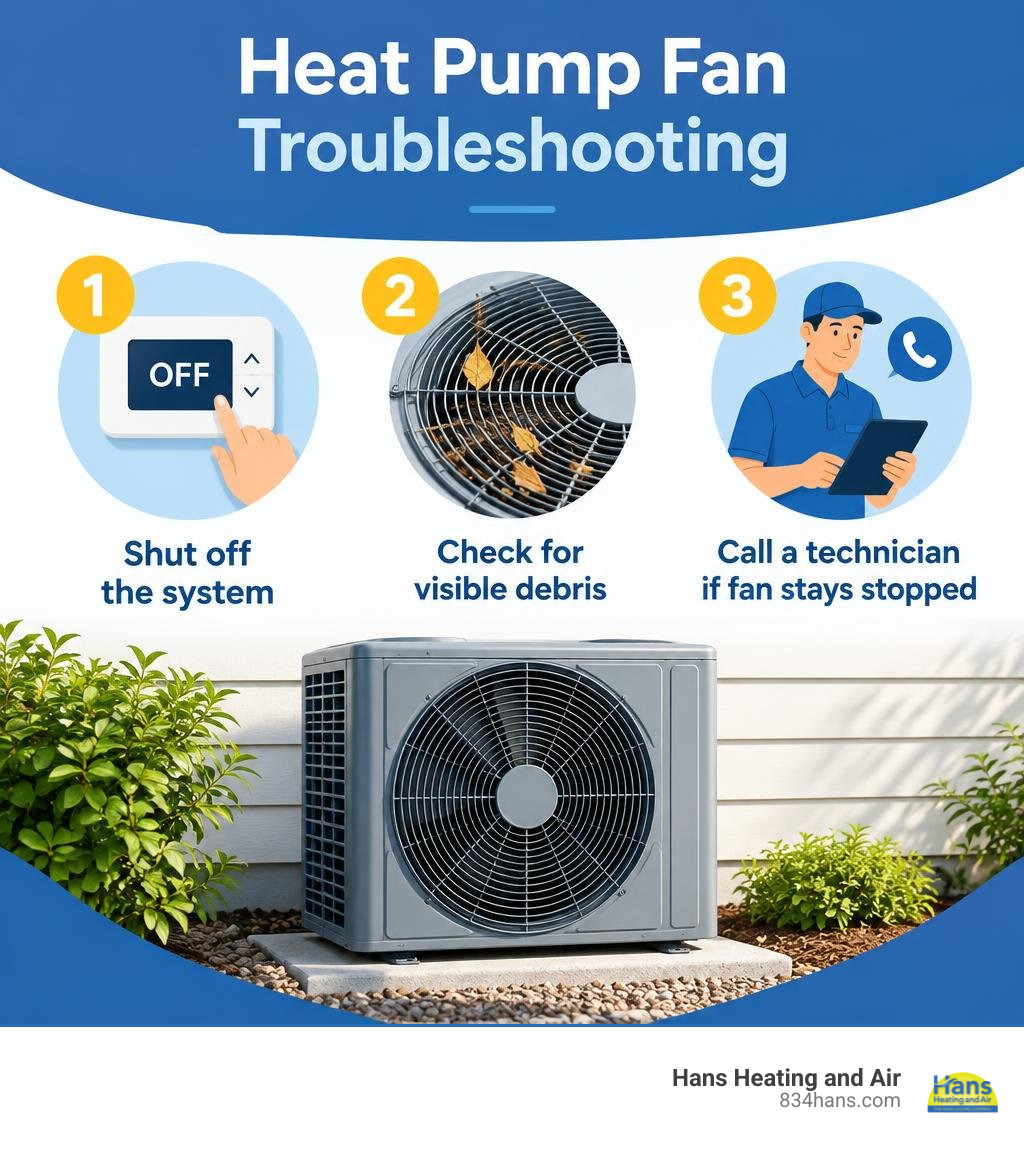
A heat pump that starts while its outdoor fan remains still can be unsettling, especially when you are not sure whether it is safe to let the system keep running. The safest first step before calling for heat pump fan repair is to switch the thermostat off and stay clear of the outdoor unit. A branch or other visible debris may be holding the fan in place, but the same warning signs can also point to a capacitor problem or a worn fan motor.
A stopped fan may need nothing more than an obvious external obstruction cleared. It can also signal a failed capacitor or motor that needs professional testing. A technician can identify which repair makes sense before recommending replacement.
I’m James Holland, and after more than two decades serving Central Alabama homeowners, I know how unsettling it is when a heating or cooling system suddenly behaves differently. At Hans Heating & Air, we help homeowners make safe observations first and understand when it is time to call for service. The goal is to give you practical next steps without asking you to take risks around electrical equipment.
Why Is Your Outdoor Fan Not Spinning? Common Culprits
Your outdoor fan motor helps keep your home comfortable across Central Alabama. In cooling mode, it moves outdoor air across the coil so the system can release heat collected indoors. In heating mode, it helps the unit gather heat from outdoor air to warm your living spaces.
When the fan stops spinning, that airflow stops too. The system can struggle to transfer heat and may overheat, particularly during humid summer afternoons in Wetumpka, Prattville, and Pike Road. Some problems are simple external obstructions, while others are electrical faults that call for professional condenser fan electrical diagnostics.
Debris and Physical Obstructions
Fallen pine needles, sweetgum balls, twigs, and overgrown shrubs can collect around an outdoor unit. A stick can slip through the top grille and wedge against the fan blades, preventing the motor from turning. If the power stays on while the blades are stuck, the motor may continue trying to run and can overheat.
Failed Capacitors and Electrical Snags
Electrical components are another common cause of outdoor fan trouble in our climate. Storms, power surges, and prolonged high temperatures can put extra strain on these components. Because electrical testing involves high voltage, it is best left to a qualified technician.
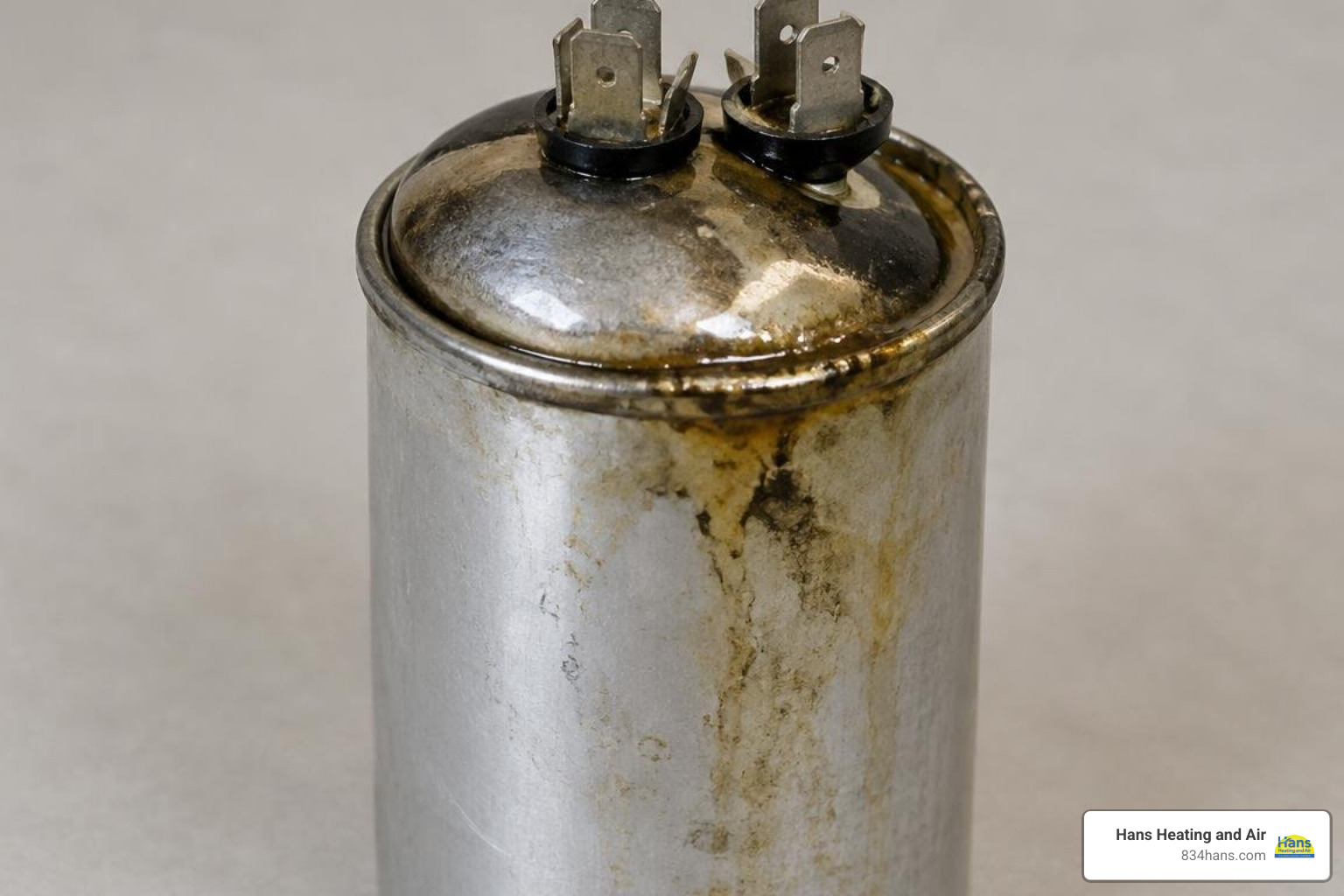
A dual-run capacitor gives the fan and compressor an initial electrical boost to start. It also provides the steady charge that helps them keep running smoothly. Capacitors often last for years, but heat and electrical surges can shorten their lifespan.
When a capacitor weakens or fails, the motor may not have enough power to start. You may hear a low buzzing or humming sound as the motor tries to run. A visibly damaged capacitor may have a swollen top or oily residue along its side.
Motor Burnout, Bearings, and Wiring
Fan motors can wear down after years of regular use. Bearings inside the motor housing may gradually lose lubrication, creating friction. A squealing or grinding noise can develop before the motor shaft eventually seizes.
Other electrical issues can also keep an outdoor fan from running. A technician may need variable-speed motor diagnostics to test failed control boards or modules properly. The checklist below covers other common electrical problems.
- Pitted or worn contactor points that prevent 240-volt power from reaching the motor.
- Loose or corroded wiring connections.
- Failed electronic control boards or modules that require variable-speed motor diagnostics to test properly.
Step-by-Step Troubleshooting and Diagnostic Checks
If your outdoor fan is not running, a few safe, systematic checks can help you understand what is happening. These observations can also help you decide whether the unit should stay off until a technician arrives. Do not open electrical covers or reach into the cabinet while checking the system.
Signs You Should Turn Off the Unit Immediately
Certain symptoms mean the system should be turned off at the thermostat. Leaving it running can put additional stress on the motor or compressor. Schedule comprehensive heat pump repair if you notice any of the following:
- Loud screeching, grinding, or metal-on-metal noises from the top of the unit.
- A strong burning electrical or plastic odor near the outdoor cabinet.
- A fan that wobbles visibly, turns very slowly, or starts and stops erratically.
- A breaker that trips as soon as cooling or heating turns on.
How to Safely Check the Unit
You can make a few basic checks without opening electrical covers or reaching into the cabinet. Focus on thermostat settings, power, and anything visible from outside the unit. Stop if you notice a burning smell, loud mechanical noise, or any damaged wiring.

- Verify Thermostat Settings and Power: Confirm that the thermostat is set to cool or heat and to a temperature that calls for the system to run. Check the electrical panel to make sure the outdoor breaker has not tripped.
- Look for Surface Debris: Turn off the system at the thermostat and the outdoor disconnect box. Look through the top grille for loose leaves or branches resting on the guard, but never reach through the grille or use tools to test the blades.
- Listen for Motor Humming: If the cabinet hums steadily while the fan remains still, turn the system off immediately. This can mean the motor is receiving power but cannot start because of a weak capacitor or seized bearings.
Normal Winter Defrost Cycle vs. True Fan Failure
During cold winter mornings in Millbrook or Lake Martin, a stopped outdoor fan is not always a failure. Frost can build up on the outdoor coil, prompting the system to run an automatic defrost cycle. During that cycle, the fan may pause while the system clears the ice.
Common signs of a standard defrost cycle include:
- The outdoor fan shuts off temporarily for about 5 to 15 minutes.
- The compressor continues to run with a noticeable hum.
- Steam rises from the top of the cabinet.
- The indoor unit uses supplemental electric heat to maintain comfort.
- For more on a normal defrost cycle, read how heat pumps operate in Alabama winters.
Once the frost clears, the fan should begin spinning normally again. If it does not restart, or if the same symptoms occur in mild weather, schedule service rather than restarting the system repeatedly. You can also read more about how heat pumps operate in Alabama winters to help separate a normal defrost cycle from a mechanical fault.
Safe Homeowner Steps and When to Call for Service
After making basic observations, you can take a few simple actions around the outdoor unit. These steps are limited to what can be done safely from outside the cabinet. If the cause is not obvious, leave the system off and arrange for professional service.
Clearing the Area Around the Outdoor Cabinet
Keeping the area around the unit clear supports airflow and can reduce future blockages. Start only after switching the thermostat and outdoor disconnect box off. Do not remove guards or reach inside the cabinet.
- Turn the thermostat to OFF and switch off the outdoor disconnect box.
- Gently remove loose leaves, pine straw, or twigs resting on the exterior surface of the top grille. Do not reach into the cabinet or disassemble the guard.
- Trim back bushes, weeds, and tall grass to maintain at least 24 inches of clear space around the outdoor cabinet.
- Only if you removed an obvious external obstruction and the blades can turn freely, restore power at the disconnect and thermostat to test the unit. Allow up to five minutes for standard time-delay controls to cycle back on, then leave the system off if the fan still does not spin.

Why Prompt Attention Protects the Compressor
Keeping the system shut down when the fan does not run helps protect other major components. Without the outdoor fan, the heat pump cannot transfer heat properly. Internal pressure and operating temperatures can rise quickly as a result.
Over time, that extra stress can lead to premature wear or compressor failure. Replacing a fan motor or capacitor is often a manageable repair, while compressor replacement is more involved and may cost between $1,200 and $2,500, depending on the unit size and warranty coverage. Turning the system off promptly can keep a smaller fan problem from becoming a larger repair.
Professional vs. DIY Heat Pump Fan Repair: Costs and Decisions
Clearing loose debris from the outer grille may be a safe DIY task when the system is powered off. Diagnosing or repairing electrical components is different because the equipment uses high voltage and requires specialized meters. When the cause is not clearly visible, professional testing is the safer choice.
A replacement capacitor may cost roughly $15 to $45 for the part alone, but DIY replacement carries shock hazards because capacitors can retain an electrical charge even after the breaker is off. Professional fan motor replacement generally ranges from $350 to $750, including parts and labor. A qualified technician can also confirm that the replacement matches the manufacturer’s required horsepower, rotation direction, and electrical rating.
| Repair or Replacement Option | Typical Cost Range (Parts & Labor) | Estimated Lifespan Considerations | Best Course of Action |
|---|---|---|---|
| Capacitor Replacement | $15 – $45 (DIY Part) / $120 – $250 (Pro) | Often lasts 5 to 10 years, depending on heat exposure and power quality | Replace promptly when weak, leaking, or swollen. |
| Outdoor Fan Motor Replacement | $350 – $750 | Typically lasts 10 to 15 years under normal operating conditions | Recommended for systems in good overall mechanical health. |
| Compressor Replacement | $1,200 – $2,500 | Variable; depends on unit age and maintenance history | Weigh system age and general reliability before investing. |
| Complete Heat Pump System Replacement | $5,500 – $11,000+ | Modern systems often provide 15 to 20 years of service with care | Practical option for aging, inefficient, or frequently failing units. |
Repairing the Fan Motor vs. Full System Replacement
If your heat pump is under 10 years old and otherwise in good condition, replacing a failed fan motor or run capacitor is often the most cost-effective path. The right decision still depends on the system’s repair history and the condition of other major components. A technician can explain the likely repair and replacement options for your specific unit.
If your system is 12 to 15 years old, uses phased-out R-410A refrigerant, or has needed several major repairs recently, continued investment may not make long-term financial sense. Modern heat pumps often have higher SEER2 efficiency ratings, which may reduce utility use depending on your home and habits. If replacement is the better route, we can help you review a new heat pump installation and flexible HVAC financing options without adding unnecessary pressure.
Routine Maintenance to Support Fan Reliability
Regular seasonal maintenance can identify minor component wear before it becomes an unexpected mid-season breakdown. During a tune-up, a technician can clean the condensing coils, inspect accessible motor bearings, and check electrical contactors. They can also test capacitor microfarad ratings to confirm the system is operating within manufacturer tolerances.
Our preventative HVAC maintenance plan in Montgomery includes bi-annual checkups and priority scheduling. Regular visits can help your heating and cooling equipment perform more dependably throughout the year. They also give you a chance to address small concerns before comfort is affected.
Frequently Asked Questions About Heat Pump Fans
Can running a heat pump without the fan cause compressor damage?
Yes. Without the outdoor fan moving air across the coils, the system cannot transfer heat properly, so pressure and operating temperatures can rise. If the fan stops spinning, switch the thermostat to “Emergency Heat” when available or turn the system off until our technicians can inspect it.
Why is the outdoor fan humming but not spinning?
A humming unit often means power is reaching the equipment, but the fan motor cannot start. Common causes include a failed start or run capacitor, a physical obstruction, or seized motor bearings. Because diagnosing the cause can require electrical testing, leave the system off and schedule service.
How do I know if my fan stopped because of a winter defrost cycle?
In cold weather, the outdoor fan may pause for 5 to 15 minutes while the compressor continues humming. You may also see light steam as frost melts from the outdoor coil. Once the defrost cycle finishes, the fan should resume normal operation on its own.
Conclusion
A malfunctioning outdoor fan does not have to disrupt your household comfort for long. Basic visual checks and clearing loose yard debris can help you identify when it is safe to wait and when the system should stay off. Understanding the difference between an electrical failure and a routine winter defrost cycle can also help protect the compressor from unnecessary strain.
When your unit needs motor testing, electrical component replacement, or a seasonal tune-up, our experienced team is here to help. Contact Hans Heating & Air to schedule service or explore our dependable residential heat pump services across the greater Montgomery area. We will help you understand the next practical step for your system.