
Home Heating Maintenance Before the First Freeze
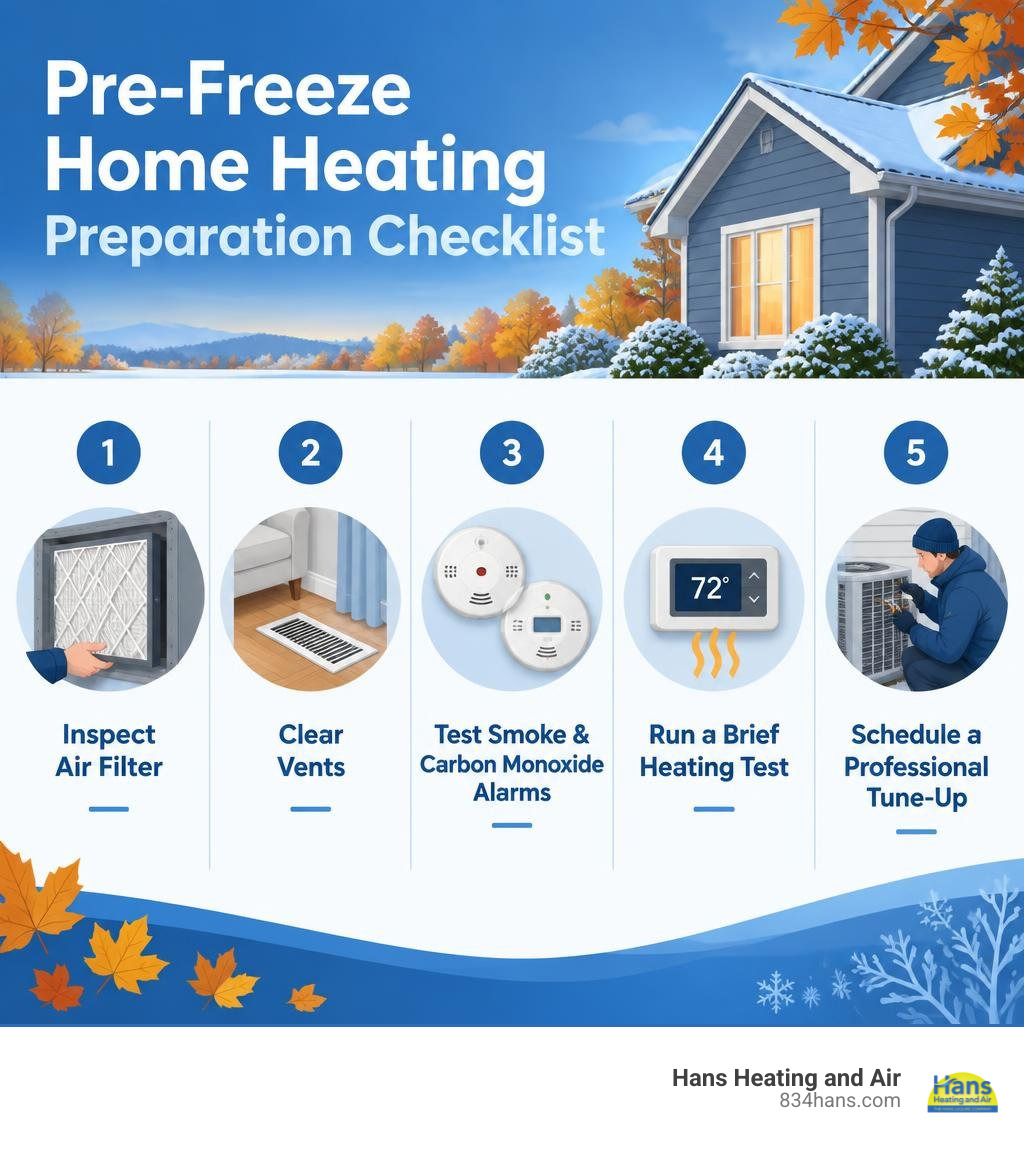
If your heat hasn’t run in months, a little preparation now can help you spot minor issues before the first cold night arrives in Central Alabama. Starting your seasonal home heating maintenance early gives you peace of mind that your system will start up smoothly when freezing temperatures drop into our area. Begin by inspecting your air filter, clearing any furniture or drapes away from supply vents, and running a brief test cycle to confirm that warm air circulates evenly across every room. It is also the perfect time to test your smoke and carbon monoxide alarms.
I’m James Holland, founder of Hans Heating and Air. I started out as a field service technician and have spent more than twenty years working on residential heating and cooling equipment throughout our local communities. In this guide, I’ll explain which home heating maintenance steps you can handle safely on your own and when scheduling a professional tune-up is your best move.
Essential Home Heating Maintenance: Professional Pre-Season Checklist
A comprehensive professional heating check-up goes far beyond a quick visual glance at your indoor and outdoor equipment. When our technicians evaluate your furnace or heat pump, we use structured maintenance guidance such as the ENERGY STAR Maintenance Checklist to thoroughly review mechanical and electrical components. Even with colder weather approaching or already arriving, a professional tune-up can help identify concerns before your system has to work through a sustained cold spell.
Critical Mechanical and Electrical Safety Inspections
Our multi-point inspection begins with a careful review of electrical connections, safety switches, and internal controls. We tighten loose wiring terminals, measure motor operating voltage, and check amperage draws to help prevent sudden electrical component failures during freezing cold snaps. Lubricating moving components reduces friction and minimizes blower motor strain, while flushing condensate drains prevents damaging moisture backups and microbial growth. Homeowners enrolled in our HVAC Maintenance Plan Montgomery AL receive these detailed safety controls and starting cycle verifications regularly to keep their heating equipment running reliably all winter long.
Burner Combustion, Heat Exchangers, and Venting Integrity
For gas and oil heating systems, fuel line safety and burner operation require precise, specialized testing. We verify manifold gas pressure, inspect pilot ignition assemblies, clean away surface corrosion, and examine burner flames for proper combustion characteristics. Our technicians also perform thorough inspections of the heat exchanger and exhaust flue to catch microscopic cracks before dangerous gases escape into living areas, following established Home Heating Safety Tips to keep your household protected. These proactive evaluations keep heating systems operating cleanly, safely, and efficiently throughout the coldest months.
Home Heating Maintenance Tasks for Homeowners and Professionals
Some heating maintenance is simple enough to handle between service visits, while other work is best left to a trained technician. Homeowners can stay on top of filters, clear vents, working alarms, and a quick heating test. Electrical checks, combustion testing, and heat-exchanger diagnostics need professional tools and training.
| Maintenance Task | Responsible Party | Recommended Frequency | Primary Benefit |
|---|---|---|---|
| Air Filter Inspection & Swap | Homeowner | Monthly inspection (replace every 30–90 days) | Restores proper airflow and protects blower motor |
| Supply & Return Vent Clearing | Homeowner | Monthly | Eliminates hot and cold spots across living areas |
| Smoke & Carbon Monoxide Testing | Homeowner | Monthly test (batteries 1–2 times per year) | Protects family from silent combustion hazards |
| Multi-Point Electrical & Safety Tune-Up | Professional HVAC Tech | Annually (every Fall) | Prevents unexpected mid-winter system shutdowns |
| Heat Exchanger & Burner Diagnostics | Professional HVAC Tech | Annually (every Fall) | Ensures safe fuel combustion and exhaust venting |
Restricted airflow can lower overall system efficiency by up to 15 percent, forcing your blower motor to work harder than necessary and causing uneven heating throughout your home. A clogged filter or blocked return grille restricts air volume, which can cause heat exchangers to overheat or heat pumps to struggle. Combining simple homeowner tasks from a seasonal Fall HVAC Maintenance Checklist with professional care keeps equipment operating at peak performance all season long.
Routine Air Filter and Airflow Care in Home Heating Maintenance
Checking your air filter monthly is one of the most effective DIY habits you can build to support your heating system. While standard manufacturer guidelines suggest replacement every one to three months, homes with shedding pets, active children, or higher dust levels often require more frequent changes. According to the Home Maintenance Schedule published by CMHC, maintaining clean filters preserves balanced airflow through return grilles and significantly reduces indoor allergens. When you replace your filter regularly, you protect sensitive internal components from dust buildup.
Maintaining Forced-Air Heating Systems
Forced-air heating systems rely on unobstructed circulation throughout your entire home to maintain balanced indoor temperatures. Make sure to keep rugs, draperies, and large furniture at least one foot away from all supply registers and return grilles in every room. Closing off vents in unused rooms can increase duct pressure and cause air leaks rather than saving energy. Understanding the operational differences between a Heat Pump vs Furnace helps you better manage airflow settings and heating cycles throughout varying Central Alabama winter conditions.
Maximizing Efficiency and Recognizing Signs of Heating Failure
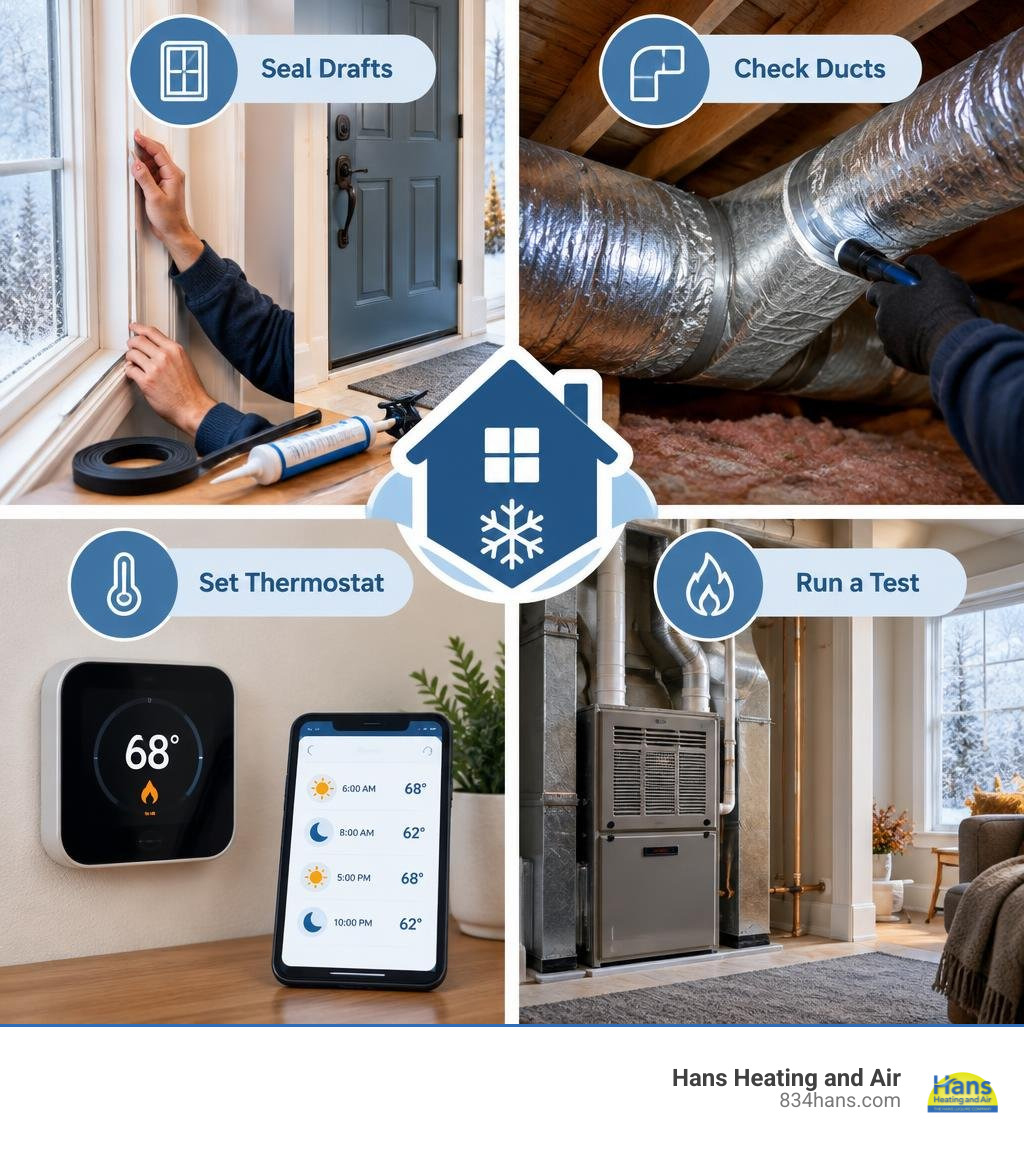
Leaky, unsealed ductwork can waste up to 30 percent of heated air before it ever reaches your living spaces. When conditioned air escapes into unconditioned attics or crawlspaces, your heating equipment must run longer cycles to satisfy the indoor thermostat. Applying weatherstripping around exterior doors, adding silicone caulk along drafty window frames, and scheduling a brief 15-minute test run before freezing weather arrives helps you discover practical ways to keep your home warm and manage Central Alabama energy bills.
Thermostat Optimization and Draft Reduction Strategies
Lowering your thermostat by 7 to 10 degrees for eight hours a day can reduce annual heating costs by up to 10 percent. Programmable and smart thermostats make these setbacks automatic while you are asleep or away at work, restoring your preferred temperature right before you wake up or return home. During sunny winter afternoons across Central Alabama, opening south-facing window curtains lets natural solar warmth into your living spaces to give your heating system a helpful break and lower daytime energy demand.
Signs You Need Professional Repairs or System Replacement
Pay close attention to subtle changes in how your heating system sounds and performs throughout the winter months. Unfamiliar rattling noises, persistent short cycling, weak airflow at supply vents, or a yellow burner flame indicate that mechanical components need professional attention. When repairs become frequent or expensive on older units, reviewing our guide on heating system repair vs replacement can clarify whether a targeted repair or a modern, high-efficiency system replacement makes the best financial sense.
Winter Heating Safety, Backdrafting Prevention, and Emergency Preparedness
Heating equipment requires sensible safety practices to protect your household from preventable fire and carbon monoxide risks when temperatures drop. The U.S. Fire Administration estimates that residential heating fires caused 27,200 fires nationwide in 2024, a useful reminder to keep the area around heating equipment clear and have venting and combustion systems checked by a qualified professional. Taking a few minutes to review winter safety basics can help keep your home warm and your family safer through the season.
Preventing Backdrafting and Carbon Monoxide Risks with Home Heating Maintenance
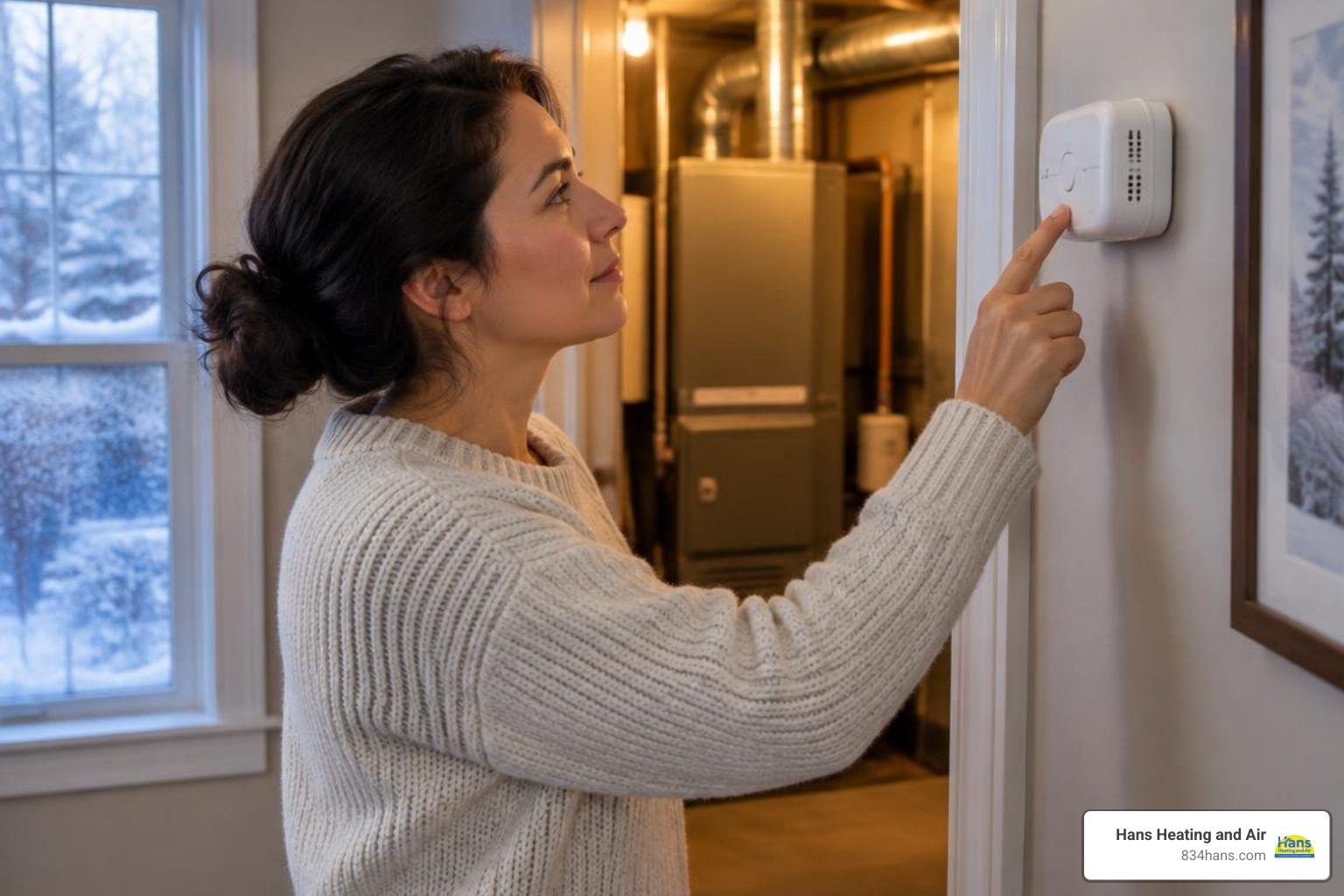
Backdrafting occurs when powerful exhaust fans, clothes dryers, or tightly sealed building envelopes create negative indoor air pressure inside a residence. This negative pressure can draw toxic combustion gases and carbon monoxide backward into your living areas instead of venting them safely outdoors through the exhaust flue. Watch for telltale warning signs like soot around the furnace draft hood, persistent condensation on vent pipes, or yellow burner flames, and ensure certified carbon monoxide alarms are installed on every floor and outside all sleeping areas.
Supplemental Heater Safety and Winter Emergency Readiness
If you use portable space heaters for supplemental warmth, maintain a strict three-foot perimeter clear of blankets, curtains, clothing, and upholstered furniture. Always plug portable electric heaters directly into dedicated wall outlets rather than light-duty extension cords or power strips, and choose modern models equipped with automatic tip-over shutoff switches. For severe winter weather preparations and sudden power disruptions, our Alabama Winter HVAC Emergencies Guide outlines what emergency supplies, extra blankets, pipe insulation, and backup heating plans you should have ready to keep your home safe and resilient during major winter storms.
Frequently Asked Questions About Heating Tune-Ups
How often should furnace and heat pump air filters be inspected?
We recommend inspecting your air filter every 30 days during peak heating months across Central Alabama. Depending on your filter thickness, household pet density, indoor dust levels, and whether anyone in your home suffers from seasonal allergies, filter replacements usually happen every 1 to 3 months to maintain proper airflow and protect your system’s blower motor from unnecessary mechanical strain.
What thermostat temperature balance provides maximum energy savings?
Setting your thermostat to 68°F while you are awake and active offers a dependable balance of comfort and energy efficiency. Lowering the temperature setting by 7 to 10 degrees overnight or while away from home helps reduce total energy consumption without sacrificing indoor comfort, and a smart thermostat makes these daily setbacks completely seamless and automatic for our local homeowners.
Why is carbon monoxide detection critical during the heating season?
Carbon monoxide is a colorless, odorless gas produced by incomplete fuel combustion in gas furnaces, boilers, and fireplaces. Because you cannot detect it by scent or sight, testing working alarms on every level of your home ensures your family is alerted immediately to potential venting hazards or cracked heat exchangers before dangerous indoor gas concentrations can occur.
Conclusion
Proactive seasonal maintenance keeps your heating system reliable, energy-efficient, and safe through cold weather snaps across Montgomery and Central Alabama. Completing basic DIY tasks like monthly filter checks and scheduling a professional pre-season inspection helps prevent unexpected breakdowns and costly emergency repairs when winter temperatures drop.
When you are ready to prepare your heating equipment for the upcoming winter, reach out to our team to schedule our comprehensive residential heating services or learn more about our Priority Services Membership. We are always here to keep your home warm, comfortable, and safe all season long.