
Do Air Purifiers Change Indoor Humidity?
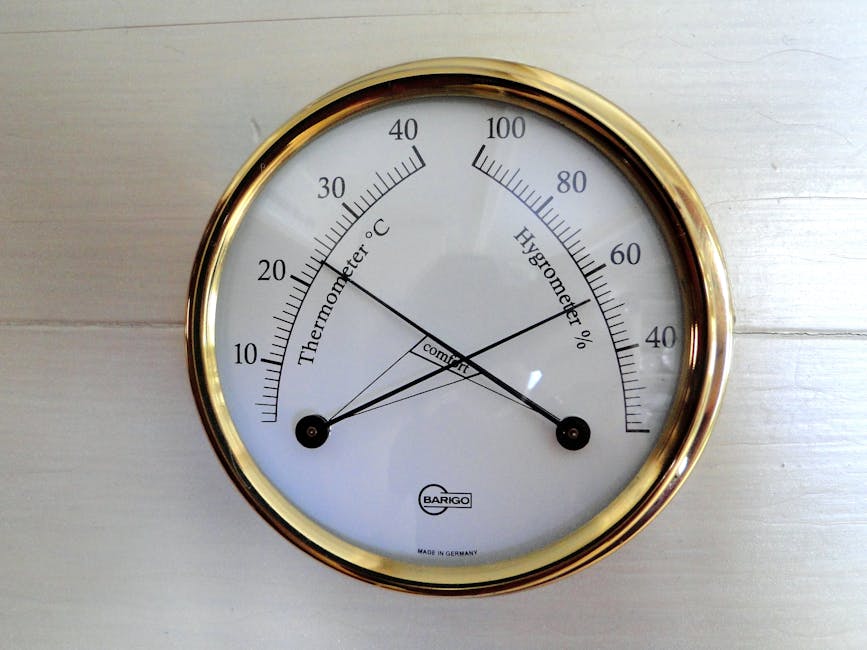
Does the air feel dry when your purifier is running? A standard air purifier filters particles, but it doesn’t remove moisture. That’s the key to understanding air purifier and humidity concerns: if a room feels dry, check its humidity with a hygrometer before changing your setup. Aim for 30% to 50% relative humidity to protect both your health and your home.
In a Montgomery home, the root cause of discomfort often shifts dramatically with our seasons. Air moving continuously across your skin can also feel drying, even when the room’s actual moisture level hasn’t dropped a bit. Taking an accurate reading with an inexpensive hygrometer gives you a reliable starting point rather than relying on guesswork alone.
I’m James Holland, and I’ve spent over 20 years working on residential heating and cooling systems in Montgomery with Hans Heating and Air. I’ll use that hands-on experience to help you navigate air purifier and humidity choices, starting with what each system can actually accomplish for your indoor comfort.
How Air Purifier and Humidity Levels Interact in Your Home
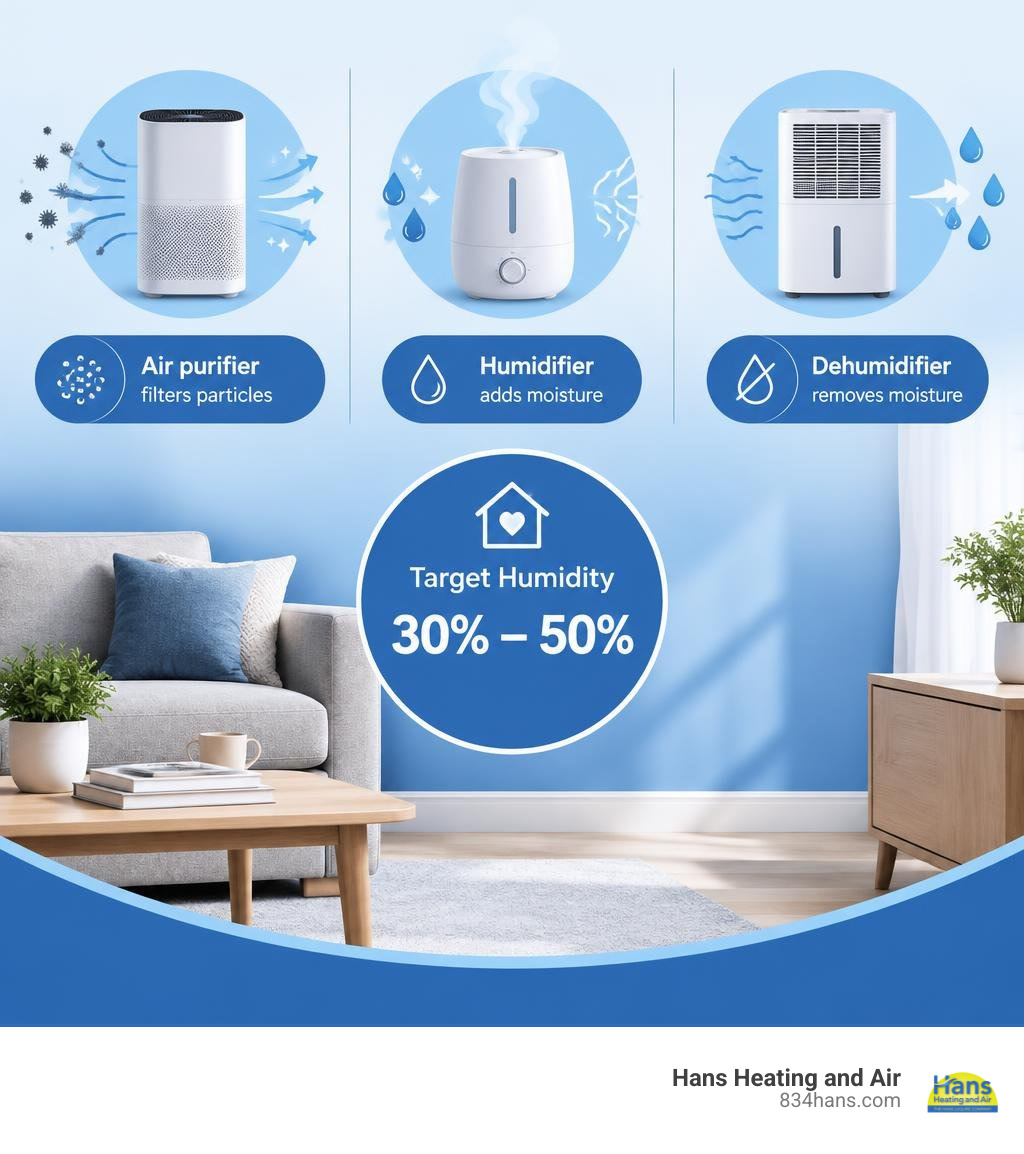
When homeowners in Central Alabama ask us about indoor comfort, they often mix up air purity and indoor moisture. An air purifier pulls room air through a series of dense mechanical media to trap solid and liquid particulates. According to standard testing metrics, True HEPA filters capture at least 99.97% of airborne particles down to 0.3 microns, and high-efficiency setups can snare pollutants as small as 0.1 microns.
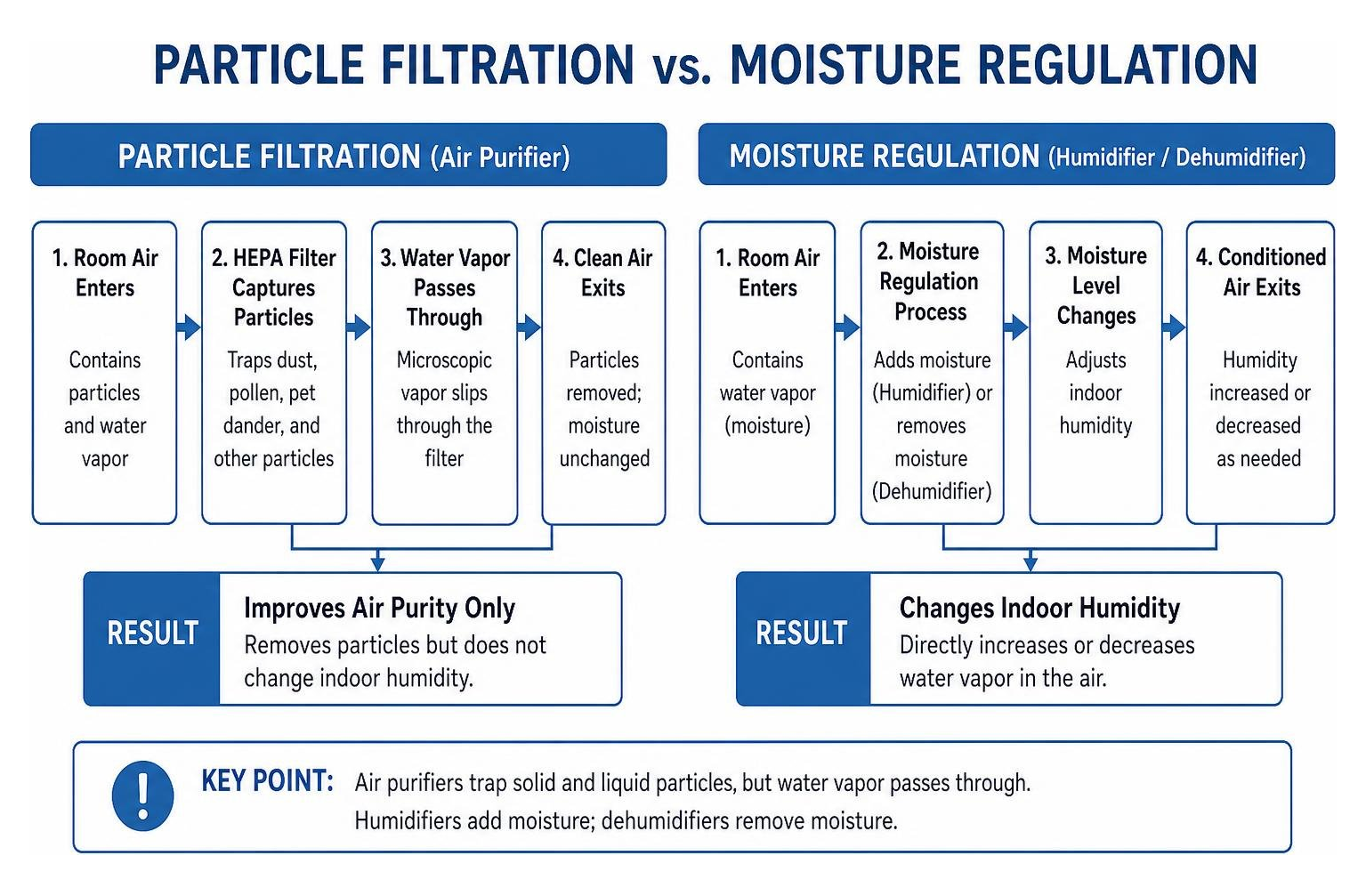
However, moisture exists as water vapor in the gas phase, which passes freely through mechanical particulate filters without being trapped. Understanding how air purifiers work compared to humidifiers clarifies why particle filtration and room moisture solve two separate indoor air challenges. Tracking Montgomery air quality trends alongside seasonal humidity shifts gives you a clearer picture of what your indoor air actually needs.
The Science Behind Air Filtration and Moisture Levels
Mechanical air filtration relies on physical mechanisms like impaction, interception, and diffusion to snare solid particles such as dust, pollen, and pet dander. Because water vapor molecules are microscopic gases, they slip straight through HEPA and activated carbon media without condensing or collecting. This means running a standalone purifier will never lower your indoor relative humidity.
Why Purified Air Can Sometimes Feel Dry
If an air purifier cannot extract moisture, why does the room often feel drier when it runs? The answer usually comes down to the draft effect created by the unit’s internal circulation fan. Moving air accelerates moisture evaporation from your skin and nasal passages, creating a cooling, drying sensation much like a standard ceiling fan. In winter, central heating naturally drives indoor humidity below 30%, which significantly amplifies this draft sensation.
Understanding the Limits of Portable Air Cleaners
Portable air purifiers are designed for single-room coverage, meaning they cannot clean air across separate rooms or replace whole-home ventilation. They also do not address source control, such as stopping off-gassing materials, resolving damp crawl spaces, or eliminating active mold colonies behind drywall. To manage whole-home air quality effectively, portable units should complement proper source control, fresh air ventilation, and balanced central air distribution.
Comparing Air Purifiers, Humidifiers, and Dehumidifiers
| Device Type | Primary Function | Moisture Impact | Best Used For |
|---|---|---|---|
| Air Purifier | Captures airborne particles, dust, pollen, and odors | None (leaves water vapor unchanged) | Allergies, asthma triggers, smoke, pet dander, and VOCs |
| Humidifier | Emits fine water mist or vapor into the air | Increases indoor relative humidity | Dry winter air, irritated sinuses, chapped skin, and static shocks |
| Dehumidifier | Condenses moisture out of circulating air | Decreases indoor relative humidity | Sticky summer dampness, musty odors, and mold prevention |
Controlling air purifier and humidity concerns starts with using the right tool for each specific job. If your living space suffers from heavy moisture or muggy indoor conditions, dedicated whole-home dehumidifiers provide the extraction power needed to keep indoor air crisp and balanced.
Core Differences Between Air Purification and Moisture Control
Air purifiers trap solid matter using dense fibers, while humidifiers actively introduce moisture via ultrasonic vibration, evaporative wicks, or steam heating. Conversely, dehumidifiers pull air across cold refrigerated coils to condense gaseous water vapor into liquid water for drainage. Official guidance from the EPA indoor air quality program notes that controlling moisture is critical because filtration alone cannot stop biological growth if high humidity persists.
Signs Your Home Needs Air Filtration vs. Moisture Adjustment
You likely need an air purifier if you notice frequent dust buildup on furniture, lingering cooking odors, pet dander, or sneezing fits from seasonal pollen. On the other hand, static shocks, morning dry throat, and cracked wood furnishings signal that your home’s air is too dry and needs added humidity. If you notice clammy indoor air or window condensation, you may be dealing with a house that feels humid with the AC running, which points toward a need for better dehumidification or HVAC calibration.
When Humidity and Airflow Point to HVAC Troubles
Persistent moisture issues or weak airflow often indicate an underlying mechanical HVAC problem rather than a simple need for portable room appliances. If your air conditioner short-cycles rapidly, it may cool the home without running long enough to pull moisture out of the air. Leaky return ducts in unconditioned attics can also pull hot, humid air straight into your living spaces, while clogged condensate lines or dirty evaporator coils reduce airflow and invite mold growth. Safe first steps include checking your thermostat fan setting to ensure it is set to ‘Auto’ rather than ‘On’, inspecting your air filter for clogs, and contacting a certified technician if moisture or airflow problems persist.
Optimizing Allergy Relief and Respiratory Comfort
Finding true respiratory relief involves addressing both particulate triggers and air moisture balance at the same time. Guidance from the EPA on indoor air recommends keeping indoor relative humidity between 30% and 50%, while the CDC mold prevention recommendations advise keeping levels below 50% all day long to stop mold from spreading. When evaluating what is better for allergies between humidifiers and air purifiers, the answer depends on whether your symptoms stem from physical particulates or dried mucous membranes.
Balancing an Air Purifier and Humidity for Allergy Relief
Air purifiers directly target allergy triggers by filtering out mold spores, dust mite debris, and pollen before you breathe them in. Meanwhile, a properly regulated humidifier keeps your airway passages hydrated, which helps your body’s natural mucous defenses trap stray particles more effectively. Managing an air purifier and humidity strategy simultaneously ensures comprehensive symptom relief during seasonal pollen surges in Prattville and Wetumpka.
Maintaining the 30% to 50% Ideal Indoor Humidity Zone
Maintaining balanced humidity is just as crucial for biological control as it is for personal comfort. Research shows that the influenza virus loses infectivity much faster when indoor relative humidity is maintained above 40%. Conversely, letting humidity climb above 50% creates a breeding ground for dust mites and mildew, making hygrometer monitoring essential for nurseries and bedrooms alike.
Strategies for Running Purifiers and Moisture Systems Together
You can safely operate an air purifier and a humidifier in the same room, provided you follow a few practical setup rules. The primary challenge is preventing wet mist from soaking into dry filter media, which could foster microbial growth. When shopping for air cleaners, look for a Clean Air Delivery Rate (CADR) that covers at least two-thirds of your room’s total square footage to ensure adequate air turnover.
Operating an Air Purifier and Humidity Device in the Same Space
Place your air purifier and humidifier at least 5 to 8 feet apart on opposite sides of the room. If an ultrasonic humidifier is placed right next to an air purifier, the intake fan can pull fine water droplets directly into the HEPA filter. Using distilled water in your humidifier prevents ultrasonic units from dispersing mineral dust that could otherwise clog the purifier’s filter and trigger particle sensors prematurely.
Pros and Cons of All-in-One Combination Units
Combination 2-in-1 units offer a compact footprint for smaller bedrooms, but they come with distinct trade-offs. While convenient, these hybrid appliances require frequent reservoir cleaning to prevent bacteria from building up right beside the filtration intake. In most homes, separate standalone devices or whole-home systems offer greater reliability, easier maintenance, and significantly better air cleaning capacity.
Routine Maintenance for Pure and Balanced Air
To keep your indoor air fresh and running smoothly, establish a regular upkeep routine:
- Clean and disinfect humidifier water tanks every 2 to 3 days using the manufacturer’s recommended solutions to prevent mold and mineral scale.
- Replace portable True HEPA and activated carbon filters every 6 to 12 months, or sooner if you have multiple pets.
- Use only distilled or demineralized water in ultrasonic mist devices to eliminate white mineral dust.
- Schedule timely air filter replacement for your central HVAC system every 1 to 3 months to protect whole-home airflow.
Frequently Asked Questions About Air Purifiers and Moisture
Do air purifiers remove moisture or dry out room air?
No, air purifiers do not remove moisture from your home. We often explain to homeowners that purifiers use dry, porous mechanical filters that allow gaseous water vapor to pass through completely unimpeded. Any dry sensation you feel usually comes from the cooling breeze of the internal fan or low natural humidity from your heating system.
Can you place an air purifier and a humidifier right next to each other?
We advise against placing them right next to each other. Keeping them separated by at least 5 to 8 feet prevents water mist from saturating the dry HEPA filter, protecting filter media and ensuring air quality sensors read accurately.
Which device is better for easing nighttime coughs and sinus congestion?
In our experience, balancing an air purifier and humidity control depends on the primary trigger. A humidifier is generally better for soothing a dry, irritated throat and loosening congestion caused by parched bedroom air. If nighttime coughing stems from dust mites, pet dander, or pollen, an air purifier captures those airborne irritants directly.
Conclusion
Managing indoor air quality is a balancing act between cleaner air and comfortable humidity. Portable devices can help in individual rooms, while whole-home options may make more sense when comfort concerns show up throughout the house.
If persistent humidity, airflow, or indoor-air concerns are affecting your home in Montgomery, Prattville, Millbrook, or Pike Road, talk to us about IAQ solutions. We can look at your airflow, ductwork, and heating and cooling system to help you understand what may be contributing to the issue and which next step makes sense.