
Fall in Central Alabama can be a little deceptive.
One afternoon you’re still running the AC, and a few days later you’re standing in front of the thermostat wondering whether it’s finally time to turn on the heat.
That’s usually when people find out their heating system isn’t quite as ready for fall as they thought.
You might turn on the heat and find that nothing happens, notice an odd smell coming from the vents, or hear a sound you don’t remember from last winter. Sometimes the system runs just fine, but after sitting unused for months, it’s still worth making sure everything is working the way it should.
The good news is that you don’t have to wait for the first genuinely cold night to find out.
At Hans Heating & Air, we recommend giving your HVAC system a little attention before you actually need the heat. Most of the checks on this list only take a few minutes, and they’ll give you a much better idea of whether your system is ready for another heating season.
So, let’s get your HVAC system ready for the cooler days ahead.
Quick Answer: What Should Be Included in a Fall HVAC Maintenance Checklist?
A fall HVAC maintenance checklist should include checking or replacing the air filter, testing the heating system and thermostat, checking airflow at the vents, clearing debris from outdoor equipment, testing smoke and carbon monoxide alarms, and scheduling a professional heating tune-up before colder weather arrives.
The goal is simple: make sure your system is ready to heat your home and catch anything unusual while there’s still time to deal with it before the first cold snap.
Here’s where we’d start.
1. Start With the Filter
We’re not going to ask you when you changed your filter last.
Honestly, most people don’t remember.
Just pull it out and take a look. If it’s covered in dust, packed with pet hair, or generally looks like it’s seen better days, go ahead and replace it with the correct size and type for your system.
A dirty filter makes it harder for your HVAC system to move air, which isn’t exactly how you want to start heating season.
ENERGY STAR recommends checking your HVAC filter monthly and replacing or cleaning it when it’s dirty.
For now, you don’t need to overthink it. If the filter looks dirty, it’s probably time for a fresh one.
And if you swear you just changed it and it’s already filthy again, make a mental note of that. A filter getting unusually dirty that quickly can be worth bringing up during your next service visit.
2. Go Ahead and Turn the Heat On
Yes, even if it’s still pretty nice outside.
Actually, that’s the point.
Waiting until the first cold morning to test your heat is a little like waiting until you’re halfway to the airport to check whether you have your passport. That’s not when you want the surprise.
Switch the thermostat over to HEAT, bump the temperature up a few degrees, and give the system a chance to get going.
Then just hang around and see what happens.
You should hear the system start, feel warm air coming from the vents, and eventually see the indoor temperature moving in the right direction.
If nothing happens, check the easy stuff first. Make sure the thermostat is actually set to HEAT, the temperature is set high enough to call for heating, and the thermostat doesn’t need new batteries.
Still nothing?
That’s a much better problem to find on a mild fall afternoon than on a 35-degree morning when everyone in the house is asking why it’s so cold.
3. Use Your Eyes, Ears, and Nose
You don’t need HVAC training for this part. You’ve lived with your system long enough to have a pretty good idea of what “normal” sounds and feels like.
While the heat is running, pay attention to:
- Smells that stick around. A little dusty smell when you first turn on the heat can be normal. A strong electrical or burning smell that doesn’t fade is another story.
- New or unusual noises. Grinding, squealing, rattling, or buzzing that you haven’t heard before is worth noticing.
- Weak airflow. If the air coming from your vents suddenly feels much weaker than you remember, make a note of it.
- Frequent starting and stopping. Your system shouldn’t constantly kick on, shut off, and start right back up.
- Rooms that won’t warm up. If a normally comfortable room suddenly stays chilly, something may have changed.
You don’t have to figure out what’s causing it. Sometimes the most useful thing you can tell us is simply, “It didn’t do that before.”
One important exception: if you smell gas or suspect a gas leak, leave the area and follow your gas utility’s emergency instructions rather than trying to investigate it yourself.
4. Do a Quick Lap Around the House
While the heat is running, take a quick walk around the house.
Start with your vents and returns. Did a couch get pushed in front of one? Is a rug covering a floor vent? Did a basket, curtain, or pet bed end up blocking airflow?
It happens more often than you’d think.
While you’re at it, notice how the rooms feel. If one bedroom is staying noticeably colder than the rest of the house, that’s worth remembering if you end up having the system checked.
And if you have a heat pump, take your lap outside too. Leaves, pine straw, weeds, and sticks can collect around the outdoor unit, so clear away any loose debris and give the equipment some breathing room.
That’s as far as you need to go. No removing panels, cleaning internal components, or turning a quick fall check into a DIY HVAC repair.
5. Since You're Already Checking Things, Test Your Alarms
This one takes about a minute.
If your home has a gas furnace or another fuel-burning heating system, make sure your carbon monoxide alarms are working before you start using the heat regularly.
Carbon monoxide doesn’t have a smell or color, so this isn’t something you can catch by paying closer attention to the furnace. You need a working alarm.
The CDC recommends having fuel-burning heating equipment professionally serviced every year and keeping working carbon monoxide detectors near sleeping areas.
Use the test button, check the batteries, and follow the manufacturer’s instructions for replacing the alarm when it reaches the end of its service life.
And since you’re already standing there pressing buttons, test the smoke alarms too.
Easy enough.
6. Let Us Handle the Stuff Behind the Panels
At this point, you’ve done your part.
You’ve checked the filter. You’ve turned on the heat. You’ve listened to the system. You’ve made sure the vents aren’t buried behind furniture. You’ve looked around the outdoor unit.
There’s no bonus prize for taking the furnace apart next.
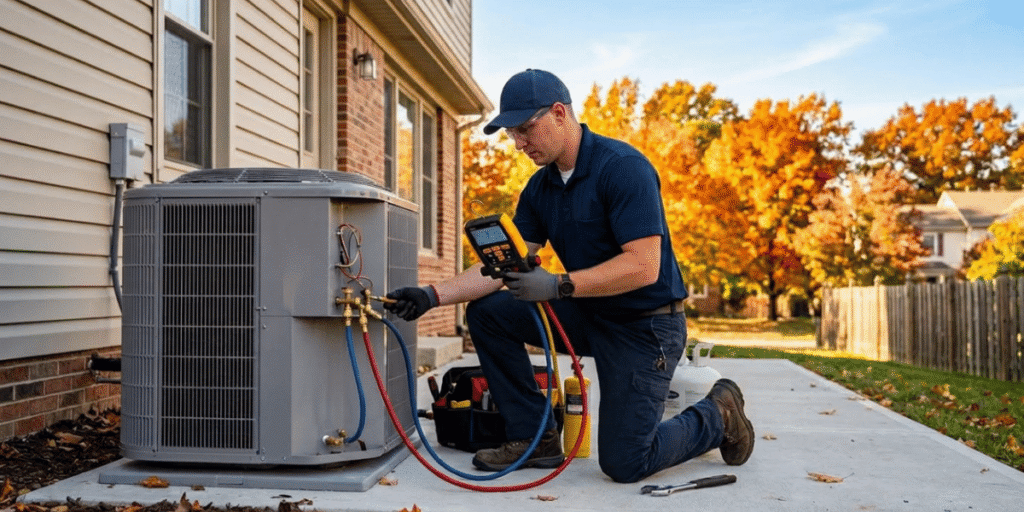
That’s where a professional fall HVAC tune-up comes in.
A technician can get inside the equipment and check the electrical components, controls, airflow, heating components, and other things you can’t tell much about just by standing next to the thermostat.
And the timing makes a lot of sense around here.
Central Alabama has a way of giving us plenty of warm fall days before suddenly reminding everyone that winter is, in fact, coming.
That’s usually when the phones start ringing.
We’d much rather see you while it’s still comfortable outside and find out everything looks great than meet you because the heat won’t come on during the season’s first cold snap.
And if we do find something?
You’ve got a chance to deal with it before you’re depending on that system every night.
That’s really what this whole checklist is about.
Your Fall HVAC Checklist, Minus All the Extra Stuff
If you’ve made it this far and just want the refrigerator-door version, here you go:
- Check the filter. Dirty? Change it.
- Turn on the heat. Make sure it actually starts and warms the house.
- Pay attention. New sounds, smells, weak airflow, or uneven heating are worth noticing.
- Check the vents. Move anything that’s blocking airflow.
- Look outside. If you have a heat pump, clear loose debris from around the outdoor unit.
- Test your alarms. Especially your carbon monoxide alarms if you have fuel-burning equipment.
- Schedule your fall tune-up. Let a technician handle what’s happening inside the equipment.
That’s it.
You don’t need a 25-point DIY maintenance routine to get ahead of heating season.
Take care of the simple things you can safely handle, and don’t ignore your system when it gives you a reason to think something has changed.
FAQs About Fall HVAC Maintenance
When should I schedule fall HVAC maintenance?
Fall HVAC maintenance should be scheduled before you begin relying on your heating system every day. In Central Alabama, having the system checked before the first major cold snap gives you time to address any problems before colder weather increases heating demand.
You don’t need to wait until it officially feels like winter. In fact, we’d rather you didn’t.
Should I test my heat before winter?
Yes. Test your heating system before winter by switching the thermostat to HEAT, raising the temperature a few degrees, and making sure the system starts and produces warm air. Testing it early can reveal startup problems, unusual sounds, odors, or weak airflow before you depend on the system during cold weather.
Is a burning smell normal when you first turn on the heat?
A mild dusty or burning-dust smell can occur when you first turn on the heat after months of not using it, and it should usually fade. Strong electrical, smoky, or persistent burning odors shouldn’t be ignored. Turn the system off and have it checked if the smell seems unusual or doesn’t go away.
Does a heat pump need fall maintenance too?
Yes. A heat pump needs fall maintenance because the same system that cools your home during summer also provides heat during winter. Fall is a good time to check the filter, outdoor unit, airflow, controls, and overall operation before the heat pump begins handling regular heating duty.
Can fall HVAC maintenance prevent a heating breakdown?
Fall HVAC maintenance can help identify developing problems before they turn into larger repairs, but no maintenance visit can guarantee that a system will never break down. A pre-season tune-up gives a technician an opportunity to spot wear, airflow issues, control problems, and other concerns before heating demand increases.
How do I know if my heater needs a tune-up or a repair?
A tune-up is generally preventive maintenance for a system that is operating normally, while a heating repair addresses a specific problem. If your heat won’t start, keeps shutting off, makes unusual noises, produces concerning odors, or isn’t heating the home properly, tell your HVAC company what you’ve noticed when scheduling service.
Get Ahead of the First Cold Snap
Getting your HVAC system ready for fall doesn’t need to turn into an all-day project.
Check the filter. Turn on the heat. Walk around the house. Pay attention to anything that seems different.
That’s most of your job.
Then let us handle the part that requires tools, training, and opening up the equipment.
Hans Heating & Air helps homeowners throughout Montgomery, Prattville, Wetumpka, and surrounding Central Alabama communities make sure their heating systems are ready before the colder weather settles in.
And we’d much rather help you find a small problem while you’re still wearing short sleeves outside than have you discover it when everyone in the house is fighting over the warmest blanket.
Schedule your fall HVAC tune-up with Hans Heating & Air and get one more thing crossed off your list before the first cold snap.